

Therapy for Burnout

If you’re experiencing burnout, you might feel like your energy, motivation, and sense of meaning have slowly eroded — even if, from the outside, it looks like you’re still “functioning.”
You’re getting things done, but you feel detached, depleted, or numb while doing them.
You’re exhausted in ways that sleep alone just won’t fix.
Many people search for therapy for burnout because rest doesn’t feel restorative anymore, time off doesn’t fix it, and pushing through has started to cost more than it gives back.

You might be here because…
You feel drained before the day even starts
Tasks that used to feel manageable now feel overwhelming
You’re running on obligation rather than interest or joy
You struggle to rest without guilt or anxiety
You feel disconnected from yourself, your work, or what you care about
You keep thinking, “Something has to change — I just don’t know what”
Burnout doesn’t always show up as a breakdown.
Often, it looks like quiet persistence past your limits.
When You’re Ready to Do Things Differently — With Support
Burnout is information — about your limits, your values, and what’s been asked of you for too long.
Therapy helps you listen to that signal with compassion and respond in ways that don’t require pushing harder or burning everything down.
-
Burnout happens when chronic stress outpaces your capacity to recover. It’s often shaped by systems that reward over-functioning, self-sacrifice, and endurance — especially for people who are conscientious, responsible, or used to holding things together.
Over time, your nervous system stays stuck in survival mode. That can lead to exhaustion, irritability, numbness, cynicism, or a sense that you’re just going through the motions.
Burnout isn’t a sign that you’re weak or doing something wrong. It’s information — your system asking for a different way of living.
-
Understand the roots of your exhaustion instead of blaming yourself
Learn how to rest in ways that actually feel restorative
Reconnect with your values when motivation feels gone
Set limits around work, relationships, and expectations without constant guilt
Feel more present, grounded, and emotionally available
Begin making changes that are sustainable — not just reactive
This work isn’t about “fixing your mindset” or becoming more productive. It’s about helping you recover your energy and sense of direction.
-
My approach to burnout therapy is trauma-informed, feminist, and grounded in Acceptance and Commitment Therapy (ACT). That means we don’t just focus on symptoms — we look at how burnout developed, what has been asked of you, and what your nervous system has been doing to cope.
Together, we’ll explore:
how over-functioning and self-sacrifice became survival strategies
how stress, values, and identity intersect in your life
what boundaries look like in practice, not just in theory
how to build a life that feels more aligned and less draining
This is therapy for people who don’t want to collapse — but don’t want to keep living in depletion, either.
Related Reading & Free Tools
When you’re burned out, even reaching out for help can feel like too much. These posts and free resources are meant to be low-effort, supportive starting points — offering education, reflection, and tools to help you better understand burnout and begin restoring your energy without pushing yourself harder.
-
![A young woman sitting on a sofa by a window, holding a mug, wearing a gray t-shirt and white socks, with a yellow blanket.]()
-
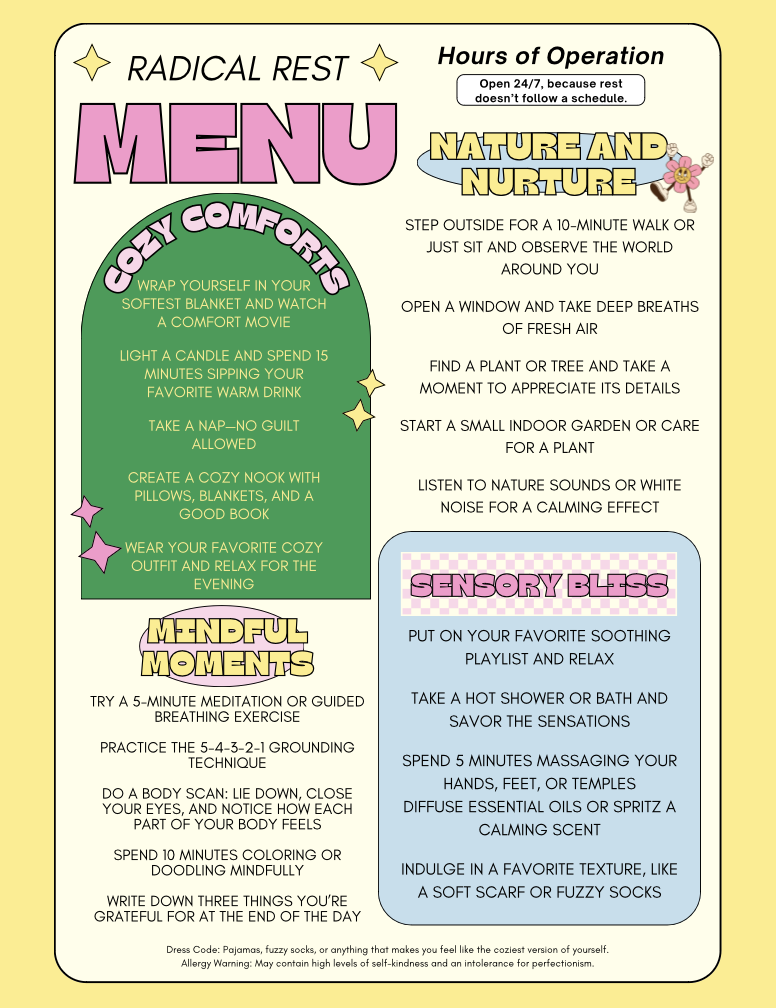
![A colorful menu titled 'Radical Rest Menu' with sections for 'Crazy Comforts,' 'Mindful Moments,' and 'Sensory Bliss,' offering tips for relaxation and self-care activities.]()
Free Download
-
![A young woman with braided hair sitting cross-legged on a bed using a pink laptop, with a dark backpack in front of her and a wooden nightstand with a potted plant and a photo on it, in a bedroom with minimalist decor.]()


You don’t have to stay stuck in survival mode
Burnout can make it hard to imagine change, especially when you’re already exhausted.
But with the right support, it’s possible to feel steadier, more connected, and more like yourself again — without burning everything down to get there.
If you’re looking for therapy for burnout, I offer in-person therapy in Cleveland, Ohio, and online therapy across Ohio and Missouri.
A First Step — No Pressure

Burnout is a sign that something needs care — not criticism. If you’re ready to explore burnout therapy, support is available.
If you’re curious about therapy for burnout, reach out to see if it feels like a fit.
Frequently Asked Questions
-
Burnout therapy focuses specifically on chronic stress, exhaustion, and the systems or expectations contributing to burnout. It’s less about “fixing” you and more about helping you recover and create sustainable change.
-
Yes. Therapy can help you understand what led to burnout, regulate your nervous system, set boundaries, and make changes that support long-term well-being rather than short-term survival.
-
Because burnout often affects people who care deeply, show up consistently, and hold a lot of responsibility. I enjoy helping people release self-blame, reconnect with themselves, and rebuild a life that feels more livable.
-
Yes. Online therapy can be especially supportive for burnout, offering flexibility and reducing the effort required to access care.
-
Recovery looks different for everyone. Some people feel relief within a few sessions; others take more time. The focus is on steady, sustainable recovery, not rushing the process.
-
Not necessarily. Therapy helps you clarify what changes are possible right now and what supports might help — without pressure to make drastic decisions before you’re ready.